- Deposit analysis is the most useful step in any cleaning plan and the one most often skipped.
- Chemical methods suit soluble deposits and limited access; mechanical methods suit hard deposits and good access.
- Every chemical and every jetting pressure must be checked against the equipment's materials of construction.
- Verification should confirm both cleanliness and restored performance once the equipment returns to service.
Cleaning decisions are often made by habit. The bundle that was hydrojetted last time is hydrojetted again; the line that was flushed with acid is flushed again. Sometimes that is right. Sometimes the deposit has changed, the metallurgy was never checked against the chemistry, or a method that suited a straight-tube bundle is applied to U-tubes it cannot properly reach.
Choosing well starts with three questions: what is the deposit, what is the equipment made of and shaped like, and how will you prove it is clean? The answers usually point clearly to one method or a combination.
Know the deposit first
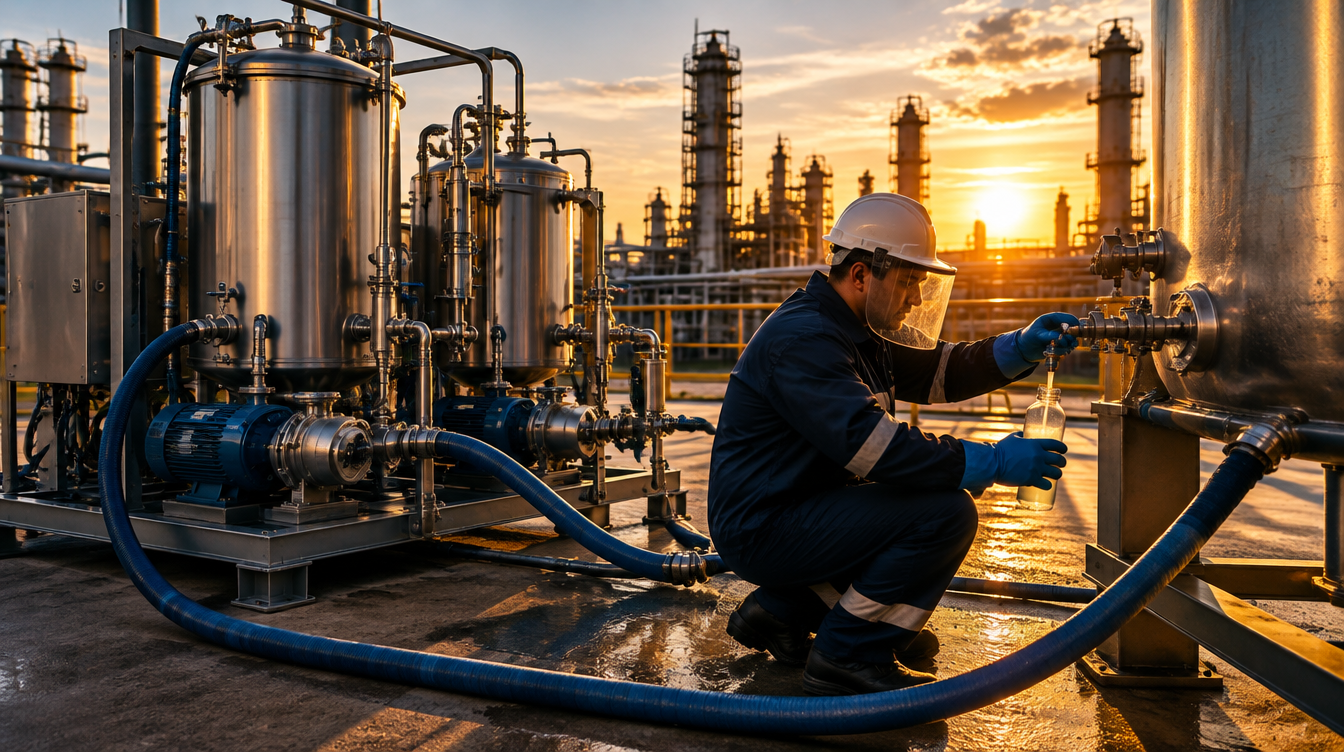
The most useful step in any cleaning plan is also the one most often skipped: sampling and analysing the deposit. Hardness scale, iron oxides, silica, organic and polymer deposits, coke, biological films and mixed layers each respond differently. A carbonate scale may dissolve readily in a suitable acid; silica may need a different chemistry or mechanical removal; heavy hydrocarbon deposits may call for solvents or degreasers before anything else will work. Without analysis the choice of method is a guess, and the guess may leave half the deposit behind or attack the equipment.
Where sampling is not possible before shutdown, use historical records and process knowledge to build a working hypothesis, and plan to sample as soon as the equipment is opened.
The main options compared
- Chemical circulation: a cleaning solution is circulated through equipment in place, reaching complex geometries such as U-tubes, shell sides and long piping runs, with careful control of concentration, temperature and contact time.
- Hydrojetting: high-pressure water removes hard and soft deposits from tube bores, shells and vessel walls, and works well wherever a lance or nozzle can physically reach.
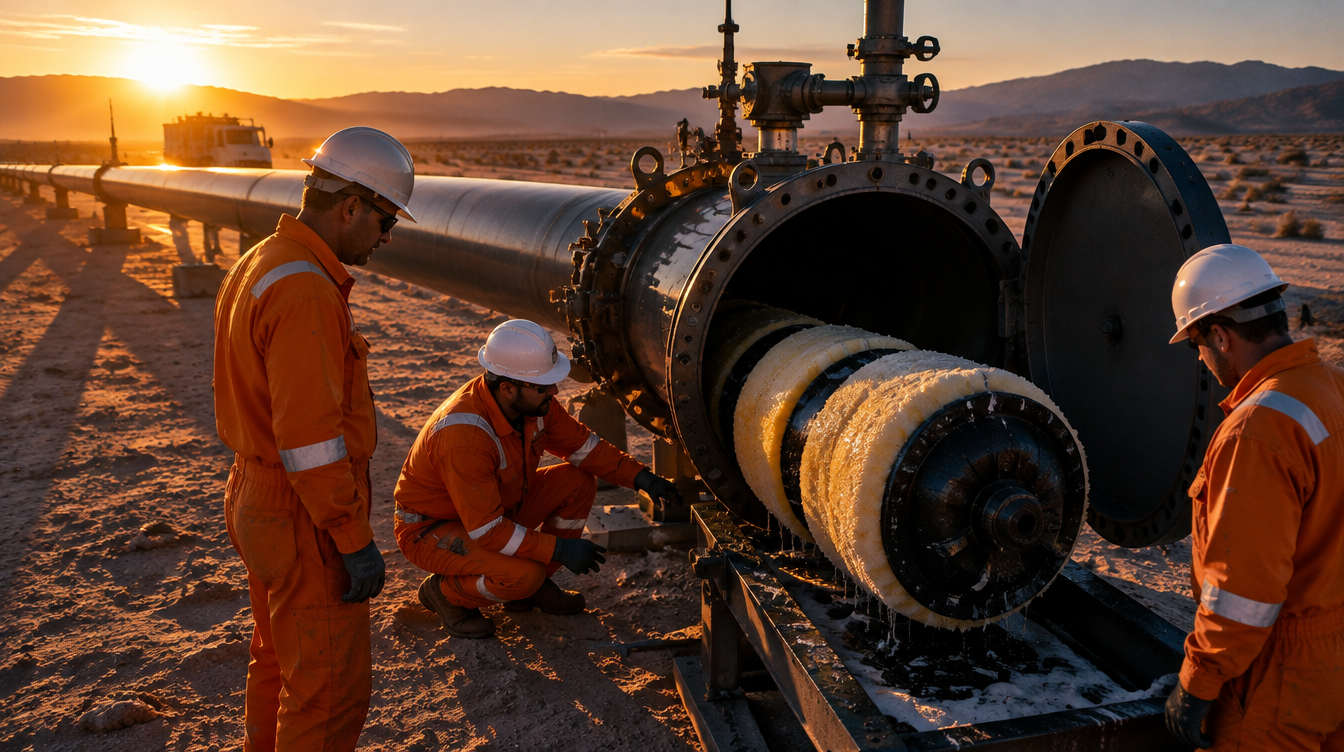
- Pigging: cleaning pigs propelled through pipelines and some tube services scrape deposits along the bore, suited to long, uniform runs with suitable access points.
- Descaling: mechanical or chemical removal of hard scale, sometimes combining an initial chemical soak with mechanical follow-up.
Chemical methods are strong where access is limited and deposits are soluble. Mechanical methods are strong where deposits are hard, insoluble or thick and access is good. Many jobs use both: a chemical stage to soften or dissolve, followed by mechanical removal, or the reverse.
Check the metallurgy before the chemistry
Every cleaning chemical has to be compatible with every material it will touch: carbon steel, stainless steels, copper alloys, titanium, duplex, and the gaskets, coatings and elastomers in between. Acids that suit carbon steel with the right inhibitor can damage other alloys, and chlorides can create cracking risks in some stainless grades. Mechanical methods have limits of their own, since high jetting pressures can damage thin-walled tubes, coatings or linings. A compatibility review against the equipment's material list should be part of every cleaning procedure, signed off by someone who understands both the chemistry and the metallurgy.
The right cleaning method is chosen by the deposit and the metal, not by what was used last time.
Waste and site conditions
Spent chemical solutions, rinse water and removed deposits all need handling. Spent acids may need neutralisation, and deposits may contain hydrocarbons, heavy metals or naturally occurring radioactive material, each of which changes how they must be managed. Hydrojetting generates large volumes of contaminated water that must be contained and treated. Waste routes and permits should be settled before the job, not discovered at the end of it. On remote sites, the availability of water, containment and disposal capacity can decide which method is practical at all.
A structured way to decide
- Sample and analyse the deposit, or form a reasoned hypothesis if sampling must wait.
- List the materials of construction, including gaskets, coatings and linings.
- Assess access and geometry to see which mechanical methods can reach every fouled surface.
- Shortlist methods that suit the deposit and are compatible with the materials.
- Confirm waste handling, water supply and permits for each shortlisted option.
- Agree acceptance criteria and the verification method before work begins.
Proving the job is done
Verification should match the equipment. For exchanger tubes, that may mean visual or borescope inspection and confirming tube bores are clear. For chemical cleans, tracking dissolved deposit in the circulating solution shows when cleaning has stopped progressing. For pipelines, pig returns tell the story. Above all, recording performance after return to service, such as heat transfer coefficient or pressure drop, confirms that the clean delivered what it was meant to and sets a fresh baseline for the next decision.
A practical first step
For your next planned clean, ask for a deposit sample and the full material list before the method is fixed, and see whether the answers change the plan. KARR's process services team can help interpret the analysis and compare options if a second opinion would be useful.
Industrial cleaning, Hydrojetting, Chemical cleaning